Beyond the Black Squares: How Beauty Brands are Failing Black Consumers and What Needs to Change
Korrine Sky · February 2025 · 4 min read
Remember the Black Squares?
Listen to this essay
Narrated version
Remember the Black Squares?
During the height of the Black Lives Matter movement, beauty brands posted their black squares in support, promising justice, equality, and a deeper commitment to Black consumers. At first, it felt like a long-overdue acknowledgment. But today, many of these same brands have reverted to old habits, offering token gestures rather than real change.
So, what happened?
Despite the continued influence of Black consumers, many beauty brands are still missing the mark when it comes to meeting the needs of deeper skin tones.
Why is this still happening?
🔄 A Pattern of Performative Inclusivity
We've seen this cycle play out again and again:1️⃣ Launch a product that doesn’t cater to deeper skin tones.2️⃣ Wait for the social media uproar.3️⃣ Issue a high-profile apology, then “fix” the product to generate media buzz.
But what’s the real issue? These quick fixes aren’t meaningful solutions. They're damage control, not a commitment to inclusivity. Black consumers are tired of having to “forgive” brands for their mistakes, only to be let down time and time again.
🚨 The Fallout: A Lack of Genuine Commitment
Several beauty brands have demonstrated this behaviour in recent years:
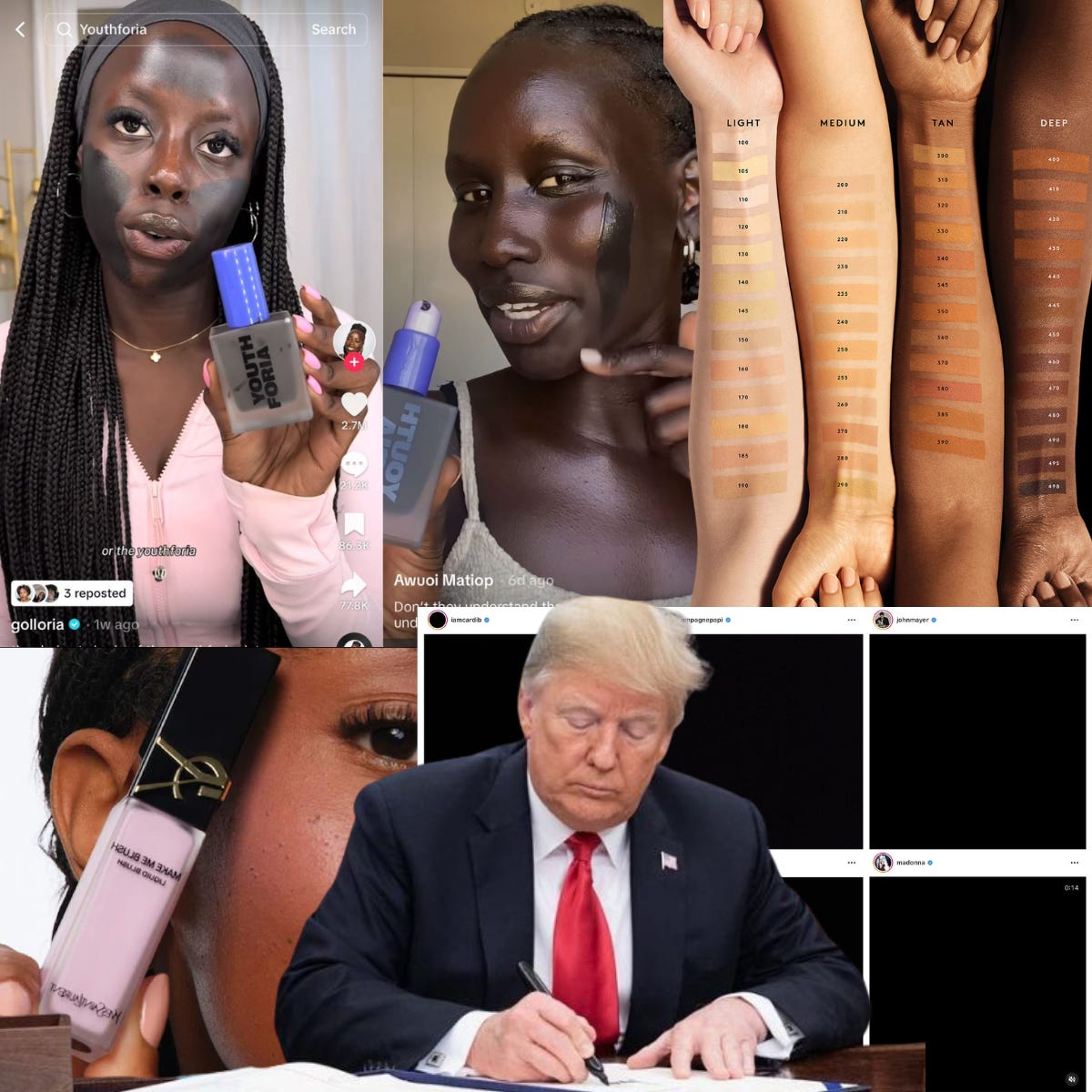
Youthforia’s “Shade 600”Marketed as an inclusive launch, this foundation shade was criticised for being a flat, lifeless black with no undertones. The result? A social media meltdown. Yet, instead of engaging with the feedback, the brand rushed to fix things, another case of damage control rather than meaningful dialogue.
YSL’s Lavender BlushPromoted as a product for deeper complexions, it turned out to be chalky and unnatural for Black and Brown skin. Real-world testing revealed a lack of understanding of diverse skin tones. This felt like a superficial effort, not a product designed with inclusivity in mind.
Rhode Beauty’s “Pocket Blushes”Marketed as a universal shade, Rhode’s blush appeared ashy on deeper skin tones, reflecting once again that inclusivity isn’t just about using a wider range of models but about designing for all complexions from the start.
❓ Why Does This Keep Happening?
It’s clear that these brands aren’t only missing the mark, they’re failing to learn from their mistakes. So why does this keep happening?
1️⃣ Waiting for OutrageRather than proactively designing for Black consumers, many brands wait until they face backlash. But when outrage drives change, it’s a sign that a brand is out of touch. This is about more than just fixing a product; it’s about fundamentally understanding what Black consumers need in the first place.
2️⃣ Tokenism in Product DevelopmentBrands often rely on Black influencers to fix their optics when products fail, but this is a surface-level solution. True inclusivity happens when Black voices are integral to every part of the product development process. When Black creators are involved in shaping the product, the result is thoughtful design that reflects their needs, not just a response to backlash.
3️⃣ Exclusion in Decision-MakingThe truth is, most beauty companies still lack truly diverse teams. Without Black voices at the decision-making table, it’s no surprise that products continue to miss the mark. Diversity needs to be embedded into every aspect of the brand—from marketing to R&D.
Brands like Fenty Beauty, Pat McGrath, and Danessa Myricks show how inclusivity should be done. These brands built inclusive offerings from the ground up, understanding early that Black consumers are the trendsetters and embracing this truth has made them leaders in the industry.
🌍 The Pioneers Who Are Leading the Charge
While many beauty brands continue to falter, influencers and activists are pushing for real change:
Nyma Tang: Through her “Darkest Shade” series, she exposed the gaps in brands’ shade ranges, demanding better representation in beauty.Jackie Aina: A long-time advocate for diversity, Jackie Aina’s efforts have forced brands to reformulate products and make real, lasting changes.Golloria: Another influential voice, Golloria holds brands accountable, ensuring they deliver on their promises for deeper skin tones.
These influencers are shaping the beauty landscape and driving authentic change in an industry that still has a long way to go.
🚀 Where Do We Go from Here?
👩🏽🔬 Diverse Teams at Every LevelInclusion must be baked into the very DNA of product development. Black voices need to be involved from the start - from the early design stages to the marketing efforts. When Black consumers are no longer an afterthought, we will see a shift in how beauty products are created and sold.
🤝 Authentic EngagementPosting a black square or issuing a public apology after a controversy is not enough. Brands must listen to Black consumers and engage with them on a deeper level. This means consistent, real-time engagement and not just when the backlash hits.
⚙️ Systemic Reform Over OpticsA “redemption arc” can’t replace systemic reform. Real change requires investing in reformulating products, empowering diverse talent, and ensuring that marketing is truly reflective of the communities served.
🔑 Will Brands Finally Wake Up?
It’s time for beauty brands to move beyond performative actions. Black consumers have long shaped the beauty industry, and their contributions should be met with real investment and authentic engagement. It’s time for brands to take note—and to act.
📋 Key Takeaways:
1️⃣ Listen to Black consumers—don’t just jump on trends.2️⃣ Invest in diverse teams—from the boardroom to the lab, inclusion must happen at every stage.3️⃣ Don’t wait for backlash—act proactively, not reactively.4️⃣ Authentic engagement means more than a social media post—it’s about long-term commitment to the communities you serve.
Will beauty brands step up, or will they continue to profit from the culture without truly investing in it?
Culture & Commerce
Get the next essay first.
Culture, brand power and influence, read straight from my desk. No spam, unsubscribe anytime.
Prefer Substack? Follow Culture & Commerce there.
Originally published in Culture & Commerce. Read the original post.