
Dressed, But Not Free: A 5-Part Cultural Deep Dive into the 2025 Met Gala
Korrine Sky · May 2025 · 21 min read
The 2025 Met Gala turned Black resistance into a dress code.But the rebellion? Still curated. Still commodified. Still behind glass.
Listen to this essay
Narrated version
Opening Note
The 2025 Met Gala turned Black resistance into a dress code.But the rebellion? Still curated. Still commodified. Still behind glass.
It was framed as tribute — 300 years of Black style, self-fashioning, and survival.But who got to wear it?Who got to sell it, archive it, control it?And who was left outside the room — again?This is a five-part cultural x-ray, an excavation of fashion as performance, power, and political theatre.
Where Black brilliance is celebrated but rarely centred.Where style is survival but visibility comes at a cost.
From erased creators to inaccessible archives, from luxury as legacy to branding as bondage — this series traces what happens when rebellion becomes runway.
📖 Scroll or jump between chapters. Each essay stands alone. Together, they tell the truth behind the spectacle.
Chapters
1. The Theme – Black Style as Spectacle
2. The Guest List – Who Gets to Show Up
3. The Archive – Sold Out or Sold Short?
4. The Necklace – Ownership vs Access
5. Branded, But Not Belonging
6. Epilogue
Chapter 1. The Theme: Black Style as Spectacle
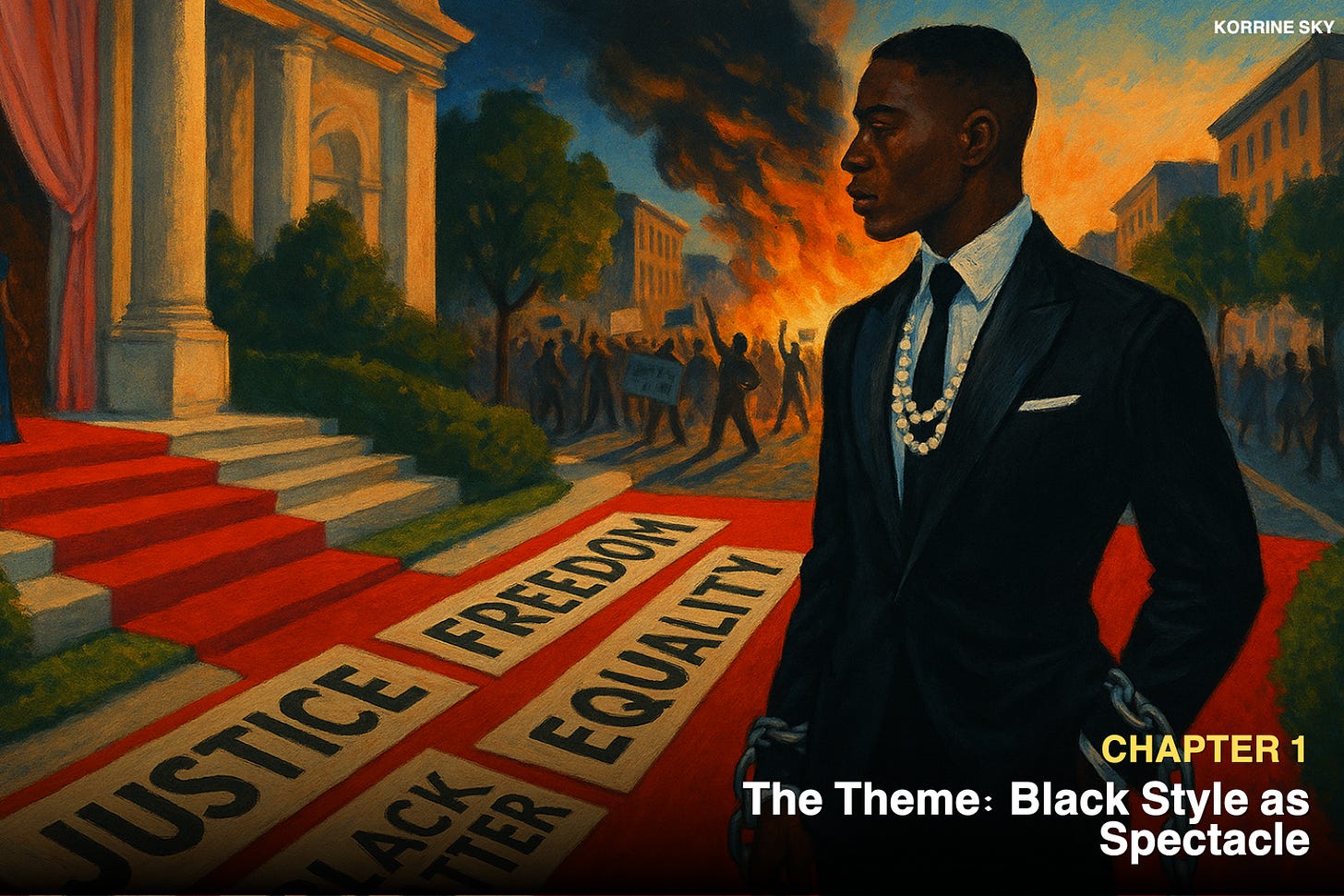
Pharrell co-chaired the 2025 Met Gala in a custom double-breasted pearl blazer his own design, brought to life by his Louis Vuitton team.While families in Rafah were buried beneath rubble.And children in Congo dug for cobalt in silence.
This year, Black resistance became a dress code.
Black Dandyism as Defiance
Black dandyism has never been just about looking good.It wasn’t born from vanity, but from necessity.
It was elegance as rebellion.Tailoring as strategy.A deliberate refusal to be invisible in a world that insisted you remain unseen.
To be well-dressed — sharply, extravagantly, unapologetically — was a political act.It was saying: I exist. I matter. I carry dignity — even if the world denies it to me.
And in 2025, this history became the Met Gala’s theme.
"Superfine" and the Limits of Celebration
“Superfine: Tailoring Black Style” was framed as a celebration — 300 years of Black self-fashioning, from plantation resistance to silk suits and stylised knitwear.
Curated by Andrew Bolton, with Black studies scholar Monica L. Miller as guest curator, the exhibit positioned style as a form of resistance, creativity, and care.
Miller’s book, Slaves to Fashion: Black Dandyism and the Styling of Black Diasporic Identity, laid the foundation for this lens — reframing Black fashion as strategy, survival, and subversion.
But dandyism didn’t begin on the runway.And it didn’t start in Vogue.
It lived in Reconstruction-era New Orleans, where free Black men like James Wormley used tailoring to demand recognition.
It was embodied in Frederick Douglass, whose composed public presence — always immaculately dressed. In a world that saw Blackness as synonymous with savagery, he wore his intellect and refinement as a shield.
His fashion was his politics.
As cultural theorist Saidiya Hartman reminds us:
“Beauty and terror often arrive in the same gesture.”
To dress with care while living through violence is not contradiction, it is testimony.
Pan-African Legacy of Style as Resistance
Across the Black world, this strategy of survival-through-style has echoed for generations — in places shaped by poverty, colonial violence, racial surveillance, and systemic exclusion.
But through style, Black people crafted their own kind of power.Their own kind of poetry.
La Sape — Société des Ambianceurs et des Personnes Élégantes — emerged in Kinshasa and Brazzaville as flamboyant resistance.Three-piece suits. Pastel colours. Patent shoes.All worn amid deep poverty.To be a sapeur wasn’t not to assimilate but to reclaim presence and turning elegance into protest.
Working-class Zulu men used weekend fashion competitions to embody pride and discipline under apartheid.Judged on neatness and composure, the Swenkas turned fashion into a coded language of dignity — restoring control over their own image.
Saga Boys rejected colonial shame and austerity.Sharp dressers with American flair, they embraced joy, sensuality, and self-adornment.It was a resistance rooted in swagger, not submission.
Dapper Dan’s custom designs became armour for Black bodies navigating capitalism and criminalisation. Fashion houses sued him, then later rebranded him as a collaborator due to his undeniable culture defining talent.
Talley stood as both gatekeeper and ghost.He rose to the top of Vogue as its first Black male editor, bringing drama, intellect, and Southern Black church elegance — capes, kaftans, gloves.But even as he helped define fashion’s language, he remained on its margins.He died estranged from the very empire he helped build.
Through turbans, kilts, ruffled collars, and jumpsuits, André 3000 refused every label.He styled himself not as an object, but as a question — a moving target that rejected definition. His fashion was refusal. Reinvention. Rebirth.
These figures didn’t only dress well — they dressed defiantly.
They made style speak where speech was suppressed.And in doing so, they transformed clothing into code and appearance into authorship.
Wherever Black people have been rendered invisible, style has served as self-assertion, soft armour, and cultural memory.
Digital Dandyism
And it hasn’t disappeared.It’s evolving.
On TikTok and Instagram, Gen Z is remixing the codes — and they’re doing it with intention.
Vintage tailoring. Church hats. Quiet luxury.”Old-money aesthetics, reimagined through Black lenses.
Historical recovery. A spiritual inheritance.A reclaiming of style traditions that were once survival tactics — and are now creative currencies.
Dandyism Under Office Lights
And this performance of presence isn’t only for followers.It shows up in the workplace, too.
For Black professionals, style is still strategy.Because in rooms not built for us, how we show up still determines how we’re treated.
We iron our collars like armour.We curate our hairstyles like political statements.We choose colour, fabric, and fit as subtle code-switches — powerful, protective, and always read.
Dandyism didn’t disappear.It simply moved under office lights.
A sharp suit at a board meeting.A bold lip in a silent Zoom call.
Even the smallest aesthetic decision carries weight — a refusal to shrink.
It’s a truth many of us inherit young:We must present perfectly just to be perceived fairly.
So yes — style remains how we archive identity, renegotiate status, and claim space.
But more than that, it’s how we survive scrutiny while insisting on dignity.
When Resistance Becomes Theme
So when the Met Gala turns this legacy — of protest, elegance, and survival — into a theme, we have to ask:
What’s being honoured?And what’s being consumed?
Because it’s one thing to celebrate Black style.It’s another to extract it, aestheticise it, and parade it through institutions that have long excluded the people who created it.
This year’s co-chairs — Pharrell, Colman Domingo, A$AP Rocky, Lewis Hamilton — are cultural icons.Black men at the height of their influence, artistry, and visibility.Their presence matters.Representation matters.It always has.
But the table was still the Met Gala —a capitalist costume ball where aesthetics move faster than accountability.
Where a theme like “Black elegance” can trend in the same breath as Gaza burns, Sudan starves, Congo bleeds.Where celebrities wear resistance like a silhouette — while the rest of the world wrestles with collapse.
Aesthetic Spectacle, Structural Silence
We are living through mass grief:Genocide. Famine. War. Surveillance. Climate collapse.
And still, we scroll past couture against the backdrop of food banks and funeral tents.Designer gowns as disaster soundtrack.
This is the contradiction:The ultra-wealthy don’t just live in gated communities —they live in curated realities, digitally staged for our consumption.
They don’t just have wealth.They perform it.And they perform it for us.
Every red carpet photo.Every viral dress.Every get ready with me from the Four Seasons.
It’s all content.And the performance is funded by our gaze.
$31 million was raised for the Met this year.
Meanwhile, unhoused New Yorkers sleep just blocks away —displaced not only from housing, but from the cultural institutions their stories helped build.
The disconnect isn’t just visual.It’s moral.
Because when culture becomes a commodity…And Blackness becomes a costume…
The question isn’t whether we’re being seen.
The question is: at what cost?
Chapter 2. The Guest List: Who Gets to Show Up?
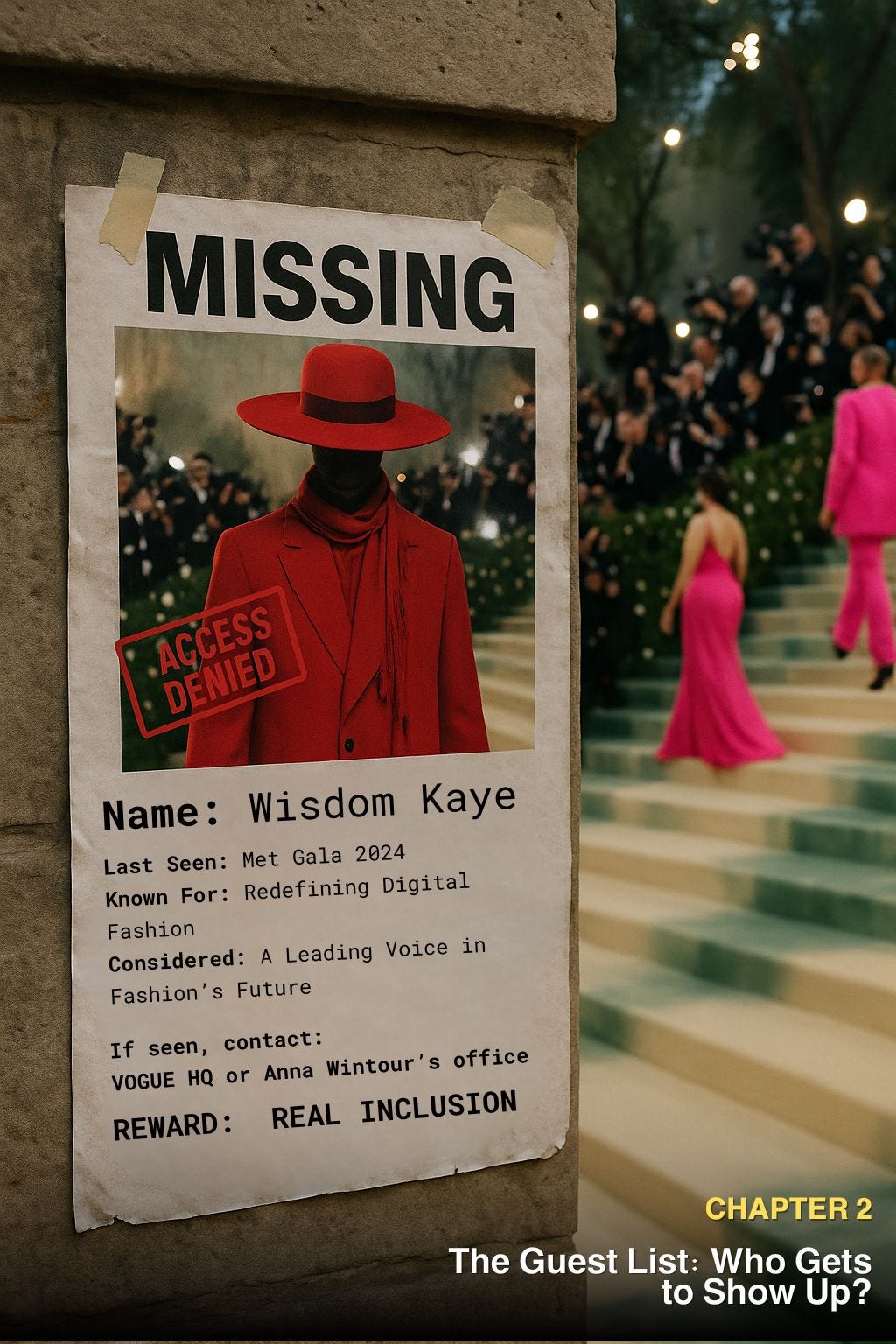
The Met Gala borrowed its theme from Black rebellion and left the rebels off the guest list.
This year’s theme, “Superfine: Tailoring Black Style”, was inspired by Slaves to Fashion, a book that reframes dress as survival, subversion, and soul-making across the Black diaspora.
It was meant to honour dandyism as resistance — where style wasn’t just aesthetic, but strategy.
But when it came time to decide who got to walk the carpet…
Wisdom Kaye — arguably the most influential Black fashion creator on the internet — was nowhere to be seen.
The Digital Dandy Left Outside
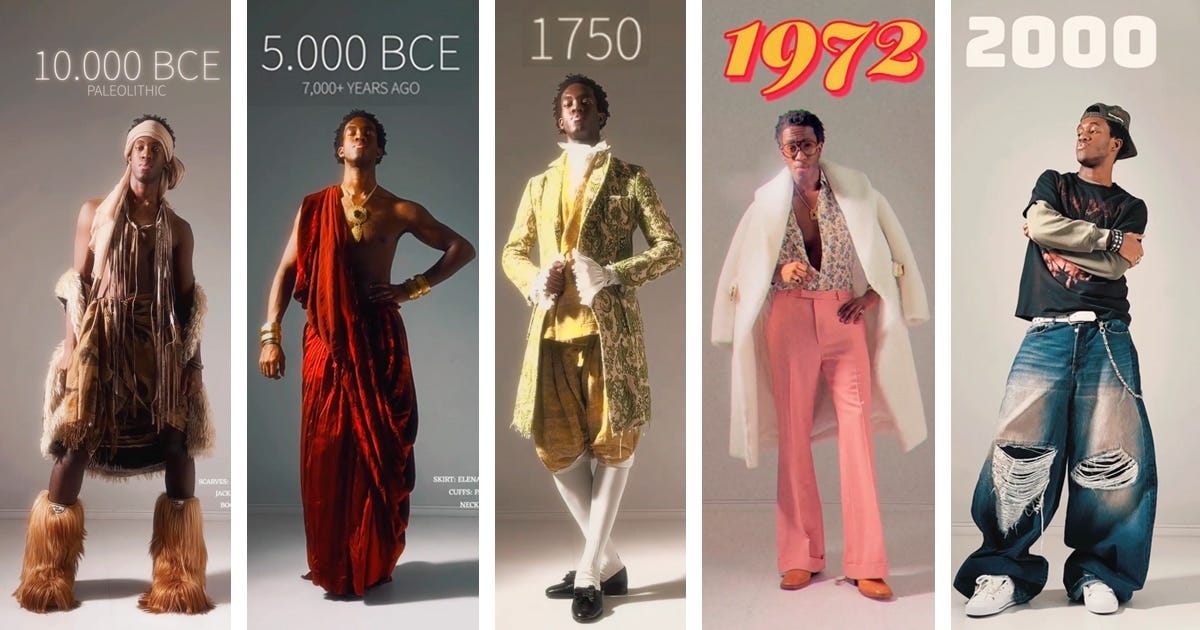
Let’s be clear:
- 13.5 million followers
- Brand partnerships with luxury fashion houses
- Sartorial storytelling that blends futurism, diaspora, and digital edge
Not only does Wisdom dress well.He embodies the theme in motion — not just in theory or costume.
And still:No invite. No brand-backed seat. No institutional recognition.
Who’s Always In — Even When It’s Not About Them
Meanwhile:
- Emma Chamberlain is hosting.
- The Kardashians remain regulars.
- Hailey Bieber stays a staple.
None of these women are irrelevant —But none of them embody the theme.
Yet proximity, not contribution, determines access.
Even when the Met Gala centres Black fashion,you’re still more likely to get invited if your presence reassures the room — not if your work reshapes it.
What happened here wasn’t a one-off oversight.It was a study in how prestige protects itself.
The Met wants credit for honouring Blackness —but not the accountability that comes with honouring Black creators outside its inner circle.
Some people are treated as inevitable.Others are asked to earn what they’ve already shaped.
One is assumed to belong.The other has to beg for recognition —even when the theme wears their work.
Who Gets to Define Fashion?
The truth is this:Institutions like the Met aren’t designed to elevate culture.They’re built to curate, gatekeep, and define it.
To decide who gets called a “designer.”Who gets named a “visionary.”Who becomes fashion — and who stays content creation.
Wisdom Kaye only attended last year because TikTok bought a table.
“If TikTok didn’t get a table, I wouldn’t have gone,” he said.
It wasn’t the Met.It wasn’t a fashion house.It was a platform — not an institution — that made space.
A platform that understood something institutions still struggle to grasp:Influence can be built in the scroll, not just the front row.
Wisdom didn’t inherit access.He didn’t get the blessing of Anna Wintour, or the runway stamp of approval.
He built his own cultural capital —the kind that lives in movement, music, moodboards, and margins.The kind the old guard still doesn’t know how to read.
Because prestige isn’t neutral.It’s not just about talent.
It’s a system — built on class, whiteness, and inherited access.
And the institutions upholding it still mistake exclusion for excellence.
The Future Is Cultural Literacy.
This could have been a turning point.A chance to close the gap between who builds culture and who gets to represent it.
Instead, it became a reminder:
Even when the dress code is Black excellence…You’re still more likely to be invited if you’re a white woman — not the Black one who defines the theme.
To the Creators Kept Outside
To the Black creators and cultural architects who weren’t invited:
You’re not being overlooked.You’re being kept out.
And still —You keep building what can’t be replicated.You keep setting the tone, defining the look, shifting the taste.
That power doesn’t require permission.
To Brands and Institutions
If you can copy their language,You can co-sign their leadership.
Culture isn’t a styling tool.It’s a creative economy.
And you owe more than a moodboard.You owe seats. Budgets. Credit. Contracts. Access.
Chapter 3. The Archive: Sold Out or Sold Short?

Black culture sold out the Met Gala.But can we afford to keep being paid in visibility?
This year’s Gala raised a record-breaking $31 million.
The theme?A celebration of Black dandyism — of resistance through style.A tribute to 300 years of rebellion, elegance, and self-fashioning in the face of dehumanisation.
The money?It funds Superfine: Tailoring Black Style, the accompanying exhibit at the Costume Institute.
The contradiction?Blackness was used to sell tickets to a building we’re rarely allowed inside.
What the Met Gala Really Is
Let’s be honest:The Met Gala isn’t about history.It’s not a museum benefit in the traditional sense.
It’s a high-stakes luxury marketing machine —where brands advertise, celebrities trend, and museums fund themselves through fashion spectacle.
This year, the spectacle was powered by Blackness.Our story. Our style. Our struggle — turned into curated moments and designer gowns.
But the question lingers:Was this a tribute or a transaction?
The Moodboard, Not the Mission
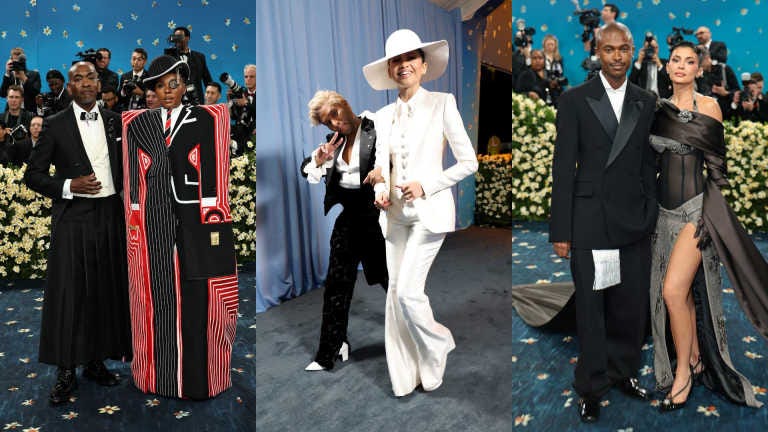
Black creators showed up and showed out:
- Teyana Taylor opened the carpet in custom Ruth E. Carter — a tribute to Harlem, to cinema, to Black costuming as care.
- Ozwald Boateng dressed a constellation: Tems, Burna Boy, Jaden Smith, Issa Rae, Ncuti Gatwa.
- Tebe Magugu for Aurora James.
- Grace Wales Bonner for Lewis Hamilton.
- Gabriella Karefa-Johnson reviving Zelda Wynn Valdes through Gigi Hadid.
- Hanifa. Savannah James. Paul Tazewell. The list goes on.
Black designers didn’t only attend.They carried the night.
But the Met didn’t invest in their futures.It invested in its own archive.
The Costume Institute Isn’t Public
That archive — the one we just helped fund?
It’s not fully accessible.It’s not community-owned.It’s not something your niece in Nigeria or your cousin in the Bronx can walk into and study from.
The Costume Institute sits within a museum known for hoarding stolen artifacts and displaying colonised remains.It calls this “preservation.”But it’s often just gatekeeping under glass.
The exhibit opens May 10 and will run for five months.
But not everyone can afford a flight to New York.Not everyone will see it.
And that matters.
Because if we’re being used to build the archive,we should be able to access it. Shape it. Own it.
We Were the Table. Still Waiting for a Seat.
We didn’t just get invited to the table this year.We were the table.
But we’re still waiting for a seat.Still fighting for credit.Still locked out of the rooms we architected.
The archive isn’t neutral.It’s a map of power — of who gets remembered, who gets erased, and who gets framed as “influence” versus “inspiration.”
Who Was This Really For?
Not for Ama — the 16-year-old in Accra or Atlanta who dreams of becoming a designer.She might never know this exhibition happened.
But her culture?Already styled, staged, and sold — without her.
This is what cultural commodification looks like.
Blackness Isn’t Niche. It’s the Engine.
Let’s be clear:When Black people get behind something, it breaks records.
- Black Panther — $1.3B
- Fenty — redefined beauty
- Renaissance — reshaped local economies
- Afrobeats, Twitter, TikTok — global reach, viral power
Brands know Blackness is profitable.
What they resist is redistribution.
They want the energy, not the equity.The content, not the control.The style — without the stakes.
Yes — Black designers belong in the room.Yes — we deserve celebration.
But we don’t owe our presence to institutions that treat us like a trend.We shouldn’t have to plead for funding.Or beg for protection.Or wait to lead.
What If We Built Something Else?
Imagine this instead:
- A global Black fashion archive — open-access, community-owned
- Paid residencies and programs from Brixton to Joburg
- Fashion history not just displayed, but activated
- Institutions led by us — not borrowing from us
Because representation without redistribution?That’s strategy without structure.
And fashion without access?That’s costume without context.
Black Culture Doesn’t Just Need to Be Seen
It needs to be:
- Supported
- Sustained
- Self-determined
Until then, the archive will remain incomplete.Because what’s the point of being preserved if we’re still being excluded?
Chapter 4. The Necklace: Who Gets to Wear Fashion?
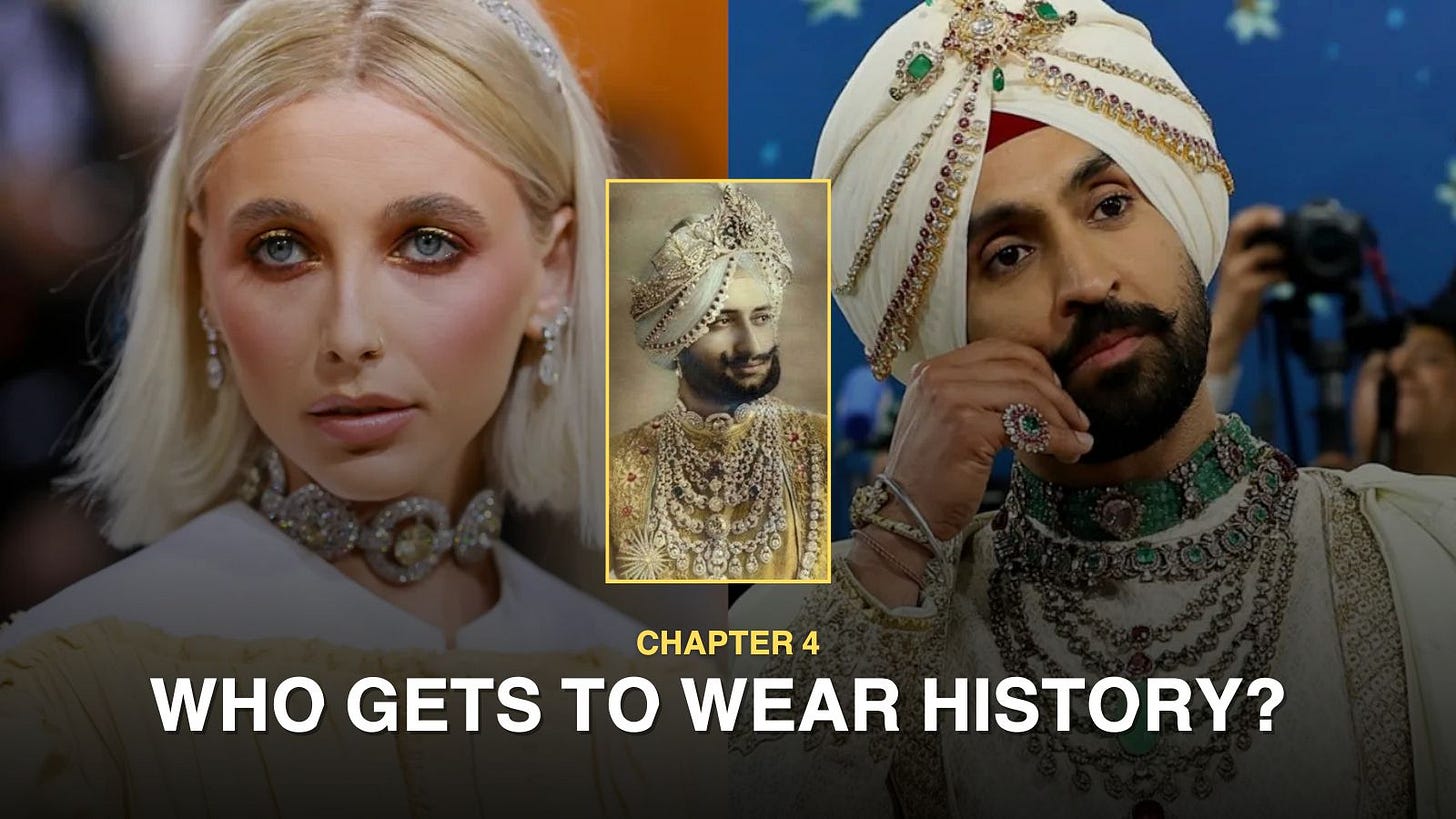
Cartier let a white American influencer wear a Maharaja’s necklace.But when a South Asian global icon asked?They said it wasn’t available.
We’re not talking about just any necklace.
We’re talking about the Patiala Necklace —Commissioned in 1928 by Maharaja Bhupinder Singh of Patiala.Cartier’s largest royal order.Nearly 3,000 diamonds.A 234-carat yellow De Beers diamond at its centre.
A symbol of Indian sovereignty, wealth, and aesthetic mastery.
After Indian independence, the necklace mysteriously vanished.
Some say it was looted.Others say it was sold under pressure.
Decades later, parts of it resurfaced in a London shop.Cartier quietly bought them back.
But not to return.Not to honour its colonial theft.To reframe it.They replaced stones. Recast the story.What was once a relic of empire became a heritage marketing tool.
Restoration. Craftsmanship. Legacy.
But whose?
Emma Chamberlain, 2022
In 2022, Cartier loaned the reassembled Patiala necklace to Emma Chamberlain for the Met Gala.
There was no mention of India.No reference to empire.No context for what that necklace represented.
It was just heritage chic — draped around a white influencer’s neck.
Diljit Dosanjh, 2025
Fast forward to 2025.Enter Diljit Dosanjh — beloved Punjabi superstar, fashion icon, and cultural bridge-builder.
He asked to wear the Patiala necklace.His look was deeply intentional:
- A sherwani that echoed Sikh royal dress
- A kirpan symbolising sovereignty and spiritual duty
- Gurmukhi script stitched into his cape
- A tribute to the theme: “Slaves to Fashion: Tailored for You” — and to the region from which the necklace came
But Cartier declined.
They told him the necklace was “on loan to a museum.”
So Diljit wore a replica — created by an Indian jeweller.
He honoured the history anyway.But the absence was loud.
The Problem Wasn’t Availability. It Was Access.
Yes — the necklace may have been under contract.But that is the issue.
We’ve built a system where heritage is preserved for prestige —not for the communities it originated from.
Where sacred objects become marketing assets,governed by brands and institutions — not descendants or historians.
When someone like Diljit — deeply connected to the cultural lineage — asks to engage with that history, he’s told:
“It’s unavailable.”
Because access was never the point.
Let’s not forget:
Kim Kardashian wore Marilyn Monroe’s dress.
A fragile piece of pop culture, decades old, was loaned — at risk — for a single red carpet moment.
So the issue isn’t whether they can make exceptions.
It’s for whom they’re willing to.
This Isn’t an Isolated Case
This is part of a pattern — one that repeats across luxury, museums, and media:
- Where South Asian fashion is renamed, rebranded, and resold without credit
- Where lehengas become "two-piece sets"
- Where bindis, dupattas, and jhumkas are reframed as Coachella trends
- Where temples, turbans, and textiles are aestheticised — but never contextualised
- Where sacred objects are displayed in glass boxes as “global heritage,”but severed from the people who gave them meaning
This is cultural appropriation at scale.
Not just borrowing aesthetics —but rewriting authorship.
Cartier had no issue loaning the necklace to Emma Chamberlain.Because she wore it as style.
Diljit would have worn it as statement.
And that’s the line luxury still refuses to cross.
Restoration Without Return
Cartier restored the necklace physically.But stripped it of its right to speak.
They removed the historical context.Sanitised the symbolism.Then showcased it as a neutral artefact — when it’s anything but.
And in doing so, they reinforced a colonial truth:
The object is preserved.But the people remain excluded.
So Let’s Ask:
- Why does culture gain value only when divorced from its people?
- Who gets to wear legacy — and who still needs permission?
Diljit didn’t wear the necklace.But he wore the truth of its absence.
And that absence spoke volumes —about power, priority, and the politics of cultural ownership.
Chapter 5: Branded, But Not Belonging

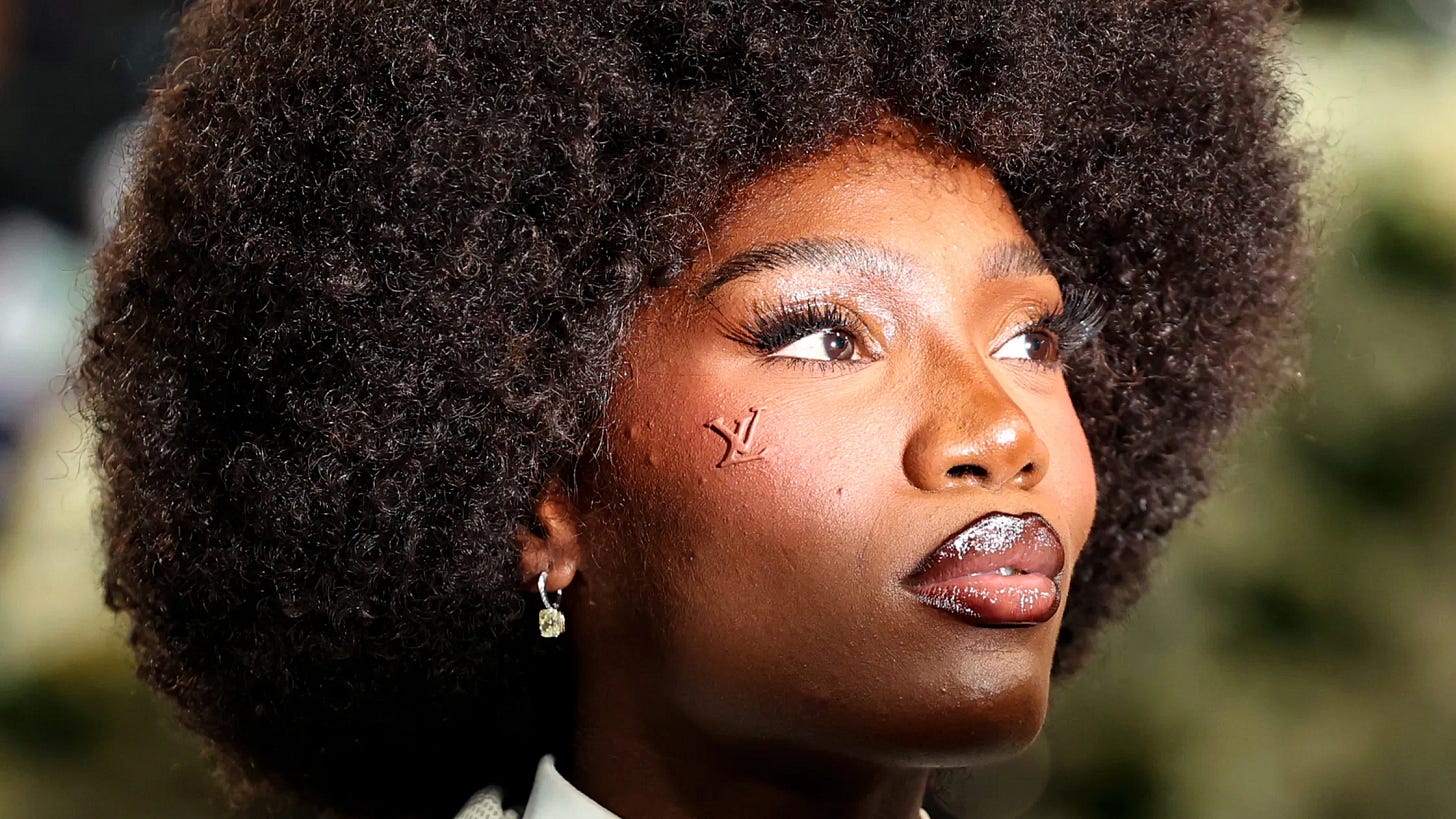
At fashion’s biggest night, a Black woman didn’t only wear a designer’s logo.
She wore it burned into her cheek.
A deliberate, loaded choice.And that’s where the conversation begins.
The woman was Doechii — rapper, style disruptor, and boundary-breaker.
Her look?
- Head-to-toe Louis Vuitton
- A prosthetic brand mark — LV, scorched into her cheek
- Created in collaboration with makeup artist Chelsea Uchenna
- A nod to the exhibition’s theme: Slaves to Fashion
It was haunting. Sharp. Visceral.And far from surface-level.
Doechii made a statement — about fashion’s history, its systems, and its scars.
The Legacy of Julius Soubise
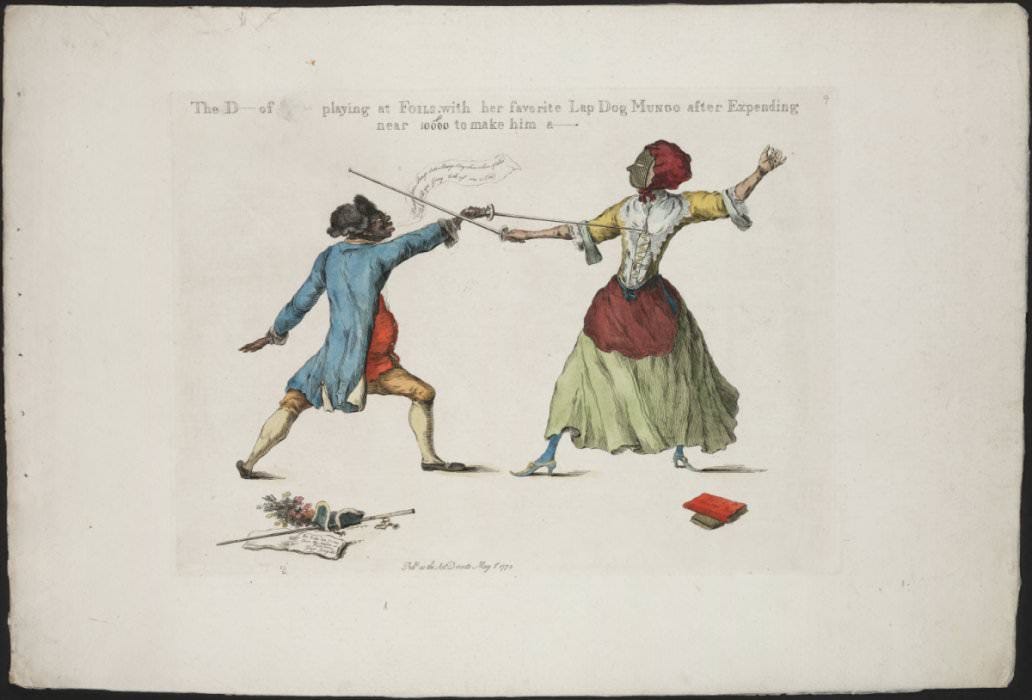
Her look drew inspiration from Julius Soubise a Black child enslaved in St. Kitts, trafficked to England at age ten.
He was placed in the household of the Duchess of Queensberry, who gave him:
- A new name
- A lavish wardrobe
- A role as her exotic companion
Soubise became a visible presence in high society —not as a peer, but as a symbol of possession.
In Enlightenment-era Britain, having a well-dressed Black companion was one way elites flaunted power through proximity.
He was styled. Elevated. Paraded.But never free.
Soubise’s life was defined by contradiction:
“Cultured,” but still owned.Celebrated, but never sovereign.Dressed, but disposable.
A Black boy taken from St. Kitts, placed in the service of the British aristocracy — not just as a servant, but as a symbol.Adorned in powdered wigs, fine silks, and fencing gear, Julius Soubise wasn’t just styled. He was curated — a living accessory of colonial power.
His body was proof of his mistress’s wealth, taste, and reach.He was the fashion and the message.And when he no longer served that image, he was discarded.
That contradiction didn’t disappear.It just changed venues.
From Enslavement to Editorial
From slave auctions to Met Gala steps,Black bodies have always been staged for elite consumption.
From iron brandings to luxury logos burned into prosthetics,ownership hasn’t ended — it’s been rebranded.
From chains and cotton to couture and clout,style became the new survival.Adornment became negotiation.
Fashion didn’t free us.But it did offer us a new kind of performance — one we hoped might be read as humanity, genius, power.
Today, the same logic survives — just with better lighting and bigger budgets.
Black bodies are still styled like statements, while the systems around them stay intact.Visibility becomes labour.Beauty becomes a brand asset.Presence becomes proof of progress — even when power hasn’t moved.
And we’ve seen this cycle play out before.
Dapper Dan: From Police Raids to Corporate Partnerships
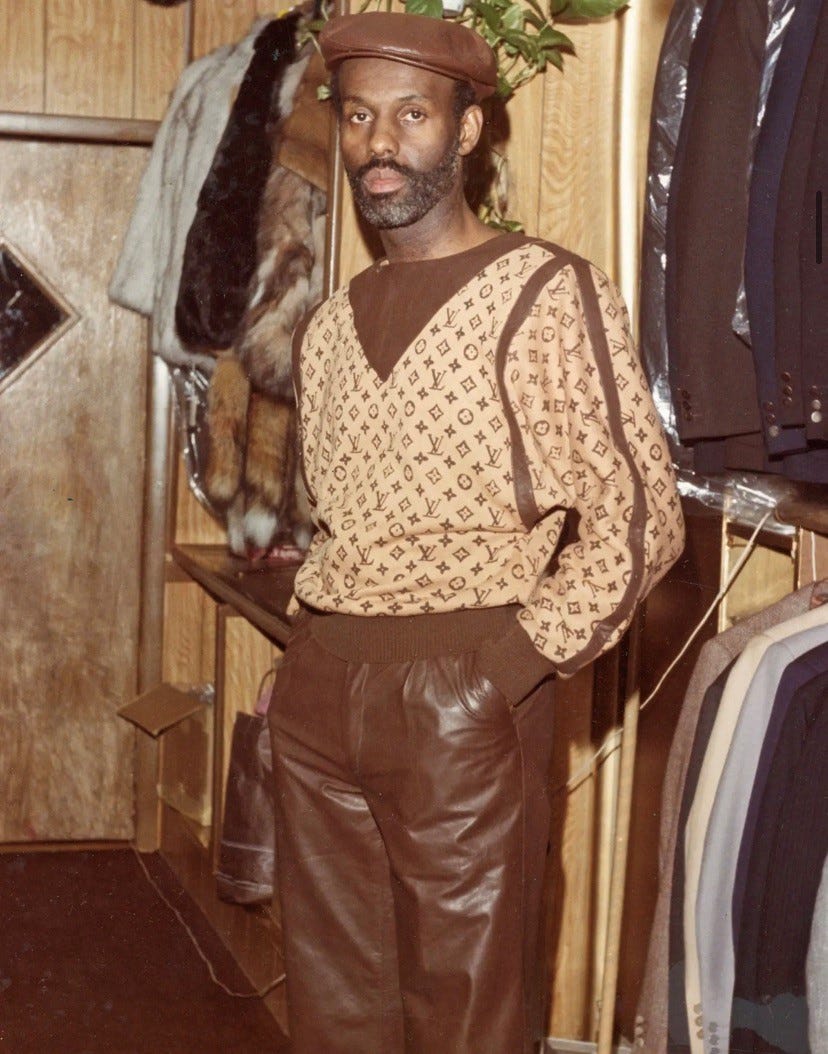
In 1980s Harlem, Dapper Dan used monogrammed luxury fabrics — bootlegged and reimagined — to outfit rappers, boxers, and hustlers in styles the industry refused to make for them.
He turned Gucci, Fendi, and Louis Vuitton into armour for Black survival and celebration.And for that, he was criminalised.
His store was raided.His designs were labelled counterfeit.Fashion houses sued him into silence.
Years later, those same brands started copying the very styles they once condemned until the backlash forced them to reckon with their hypocrisy.
They returned to Dan, not with apology… but with a partnership.
Because they realised he held cultural capital they could no longer ignore.
The message was clear:You can’t remix us until we say so.But once we do, we’ll sell you back to yourselves.
Lil’ Kim: Branded, But Not Approved
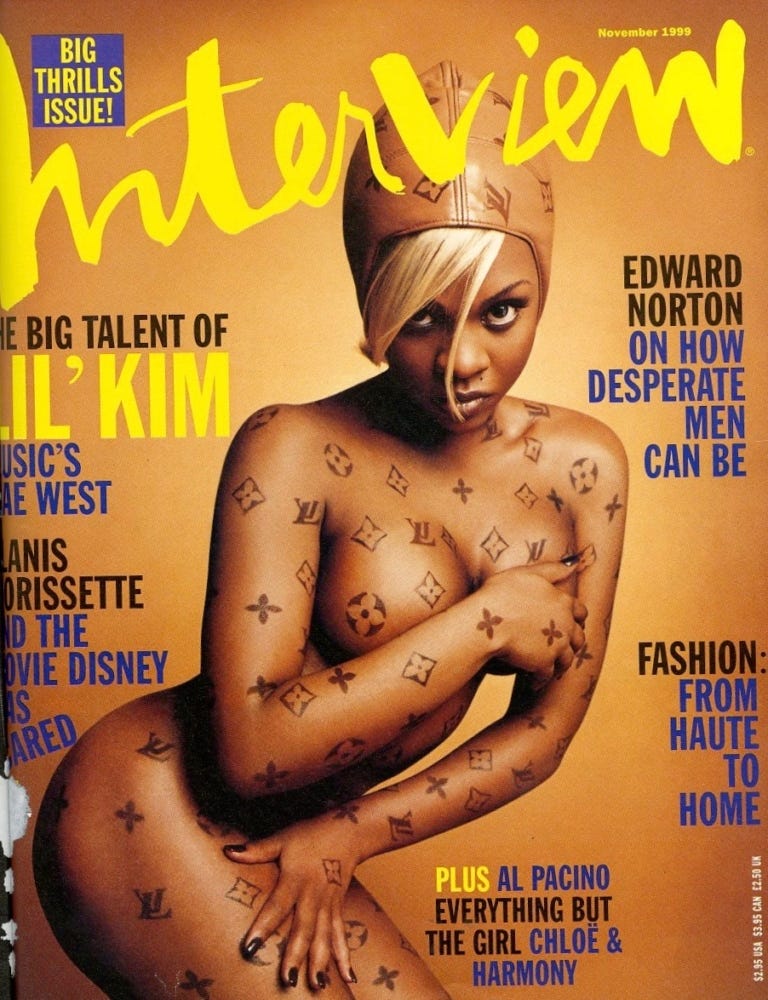
In 2000, Lil’ Kim was photographed by David LaChapelle naked, her body adorned with Louis Vuitton logos painted directly onto her skin.
It was bold. Unapologetic. Daring.Her body was the canvas. The luxury. The message.
But there was no partnership with LV.And shortly after, LaChapelle and Lil’ Kim were sued.
She wasn’t Louis Vuitton enough.The brand didn’t value being showcased by her — even as her image, her Blackness, her femininity became one of the most recognisable fashion moments of the decade.
The logo was fine.Until it was on skin they didn’t control.
André Leon Talley: The Grandest, Yet Still Outside
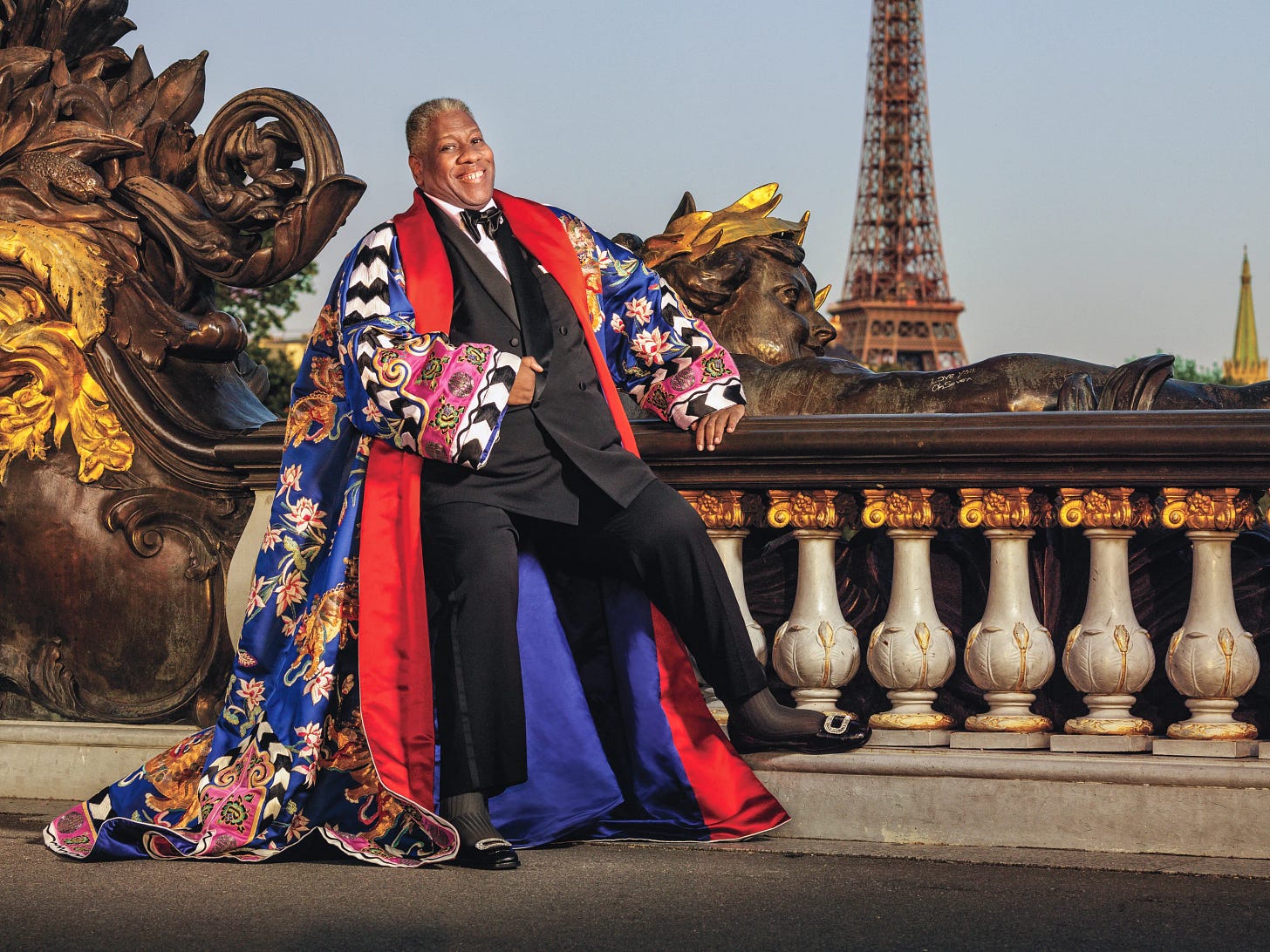
André Leon Talley gave Vogue its glamour. Its drama. Its global reach.He wasn’t just a fashion editor — he was the blueprint.
As Fashion News Director from 1983, he helped Anna Wintour cement ties to Paris couture and shaped the visual language of luxury for a generation.He brought Black elegance to the heart of an institution that never fully embraced him.
Despite his stature, he was underpaid, excluded from leadership, and ghosted by Wintour in his final years. He spoke publicly about being denied Met Gala invitations and struggling financially — while the empire he helped build carried on without him.
He was always celebrated for his spectacle.But never given structural power.
Fashion loved what he symbolised — but never made space for what he knew.
Across all these stories — from Soubise to Doechii — the pattern holds:
The rules change when we wear it.Then change again when they sell it back to us.
Black cultural expression is embraced when it’s profitable,but punished when it’s self-possessed.
Fashion doesn’t mind our brilliance.It just wants control over how it’s packaged, priced, and performed.
It wants us visible — not powerful.Present — but not in charge.
21st-Century Slaves to Fashion
This is the tension Doechii made visible:
- That we still peacock to be seen.
- That we still perform worth through designer names.
- That we still brand ourselves in hope of access — only to find the door locked.
We’re told the right logo opens doors.That if we wear the brand, we become part of the story.
But most of us never make it inside.We’re still performing in the hallway.Dressed up — but never let in.
Branding Has Always Had Two Meanings
In slavery, branding meant ownership — seared into skin.Today, branding signals value — stitched into fabric.
But either way, the message is the same:This belongs to someone else.
So Doechii wore a legacy:
- Of styling to survive
- Of looking exceptional just to be allowed in the room
- Of being both spectacle and labour — while the gate remains shut
As Jay-Z said:
“Still a n***.”*
And as Kanye West rapped in All Falls Down:
“We shine 'cause they hate us, floss 'cause they degrade us...We tryna buy back our 40 acres...Even if you in a Benz, you still a n*** in a coupe.”*
The logic hasn’t changed.
No matter how loud the logo, the house wasn’t built for us.Only styled by us.Only sold through us.
What Doechii Wore Was the Truth
She wore the contradiction:Captivity disguised as couture. Status stitched into submission.
She made visible what the fashion wouldn’t say:
That presence is still performance.That branding is still burden.That excellence is still expected to arrive branded, polished, and grateful.
Her face said what the red carpet refused to admit:
We’re still asked to trade identity for inclusion.Still surviving the performance.Still branded — but not belonging.
Epilogue: Dressed, But Not Free
Five chapters. One thread.
From Julius Soubise to Doechii.From auction blocks to red carpets.From tailoring as resistance to branding as burden.
This year’s Met Gala claimed to honour Black style —but what it really revealed was how deeply our culture remains curated by others.
We were the inspiration. The spectacle. The content.But rarely the decision-makers.Rarely the beneficiaries.Rarely the ones in control of how the story was told — or sold.
What we wear has always meant more than aesthetics.
It’s been protection. Rebellion. Memory.It’s been how we survived being seen before we were safe.
But visibility without power is still performance.Representation without redistribution is still theatre.Access without agency is just another costume.
Yes — Black style is divine.Yes — we deserve celebration.
But until the archivists are funded,the rebels are invited,the visionaries are paid,and the culture is credited at its source —
it’s not tribute.It’s transaction.
To the brands and institutions:If you can borrow our language,you can invest in our leadership.
To the storytellers and culture-makers:Keep building what can’t be bought.Keep wearing what power refuses to name.
Because the future of fashion isn’t what’s worn —it’s who gets to decide what it means.
And we’re no longer dressing for approval.
We’re dressing for remembrance.For refusal.For return.
Share
About the Author
Korrine Sky is a cultural strategist, writer, and creative director exploring the intersections of branding, identity, and power.
She’s the founder of Culture & Commerce — a platform dissecting how culture is marketed, monetised, and misrepresented in public life.
Through essays, campaigns, and consultancy, Korrine helps brands and creatives build visibility with context, clarity, and cultural credibility.
🔗 Learn more | 📩 Work with me
Subscribe now
Culture & Commerce
Get the next essay first.
Culture, brand power and influence, read straight from my desk. No spam, unsubscribe anytime.
Prefer Substack? Follow Culture & Commerce there.
Originally published in Culture & Commerce. Read the original post.