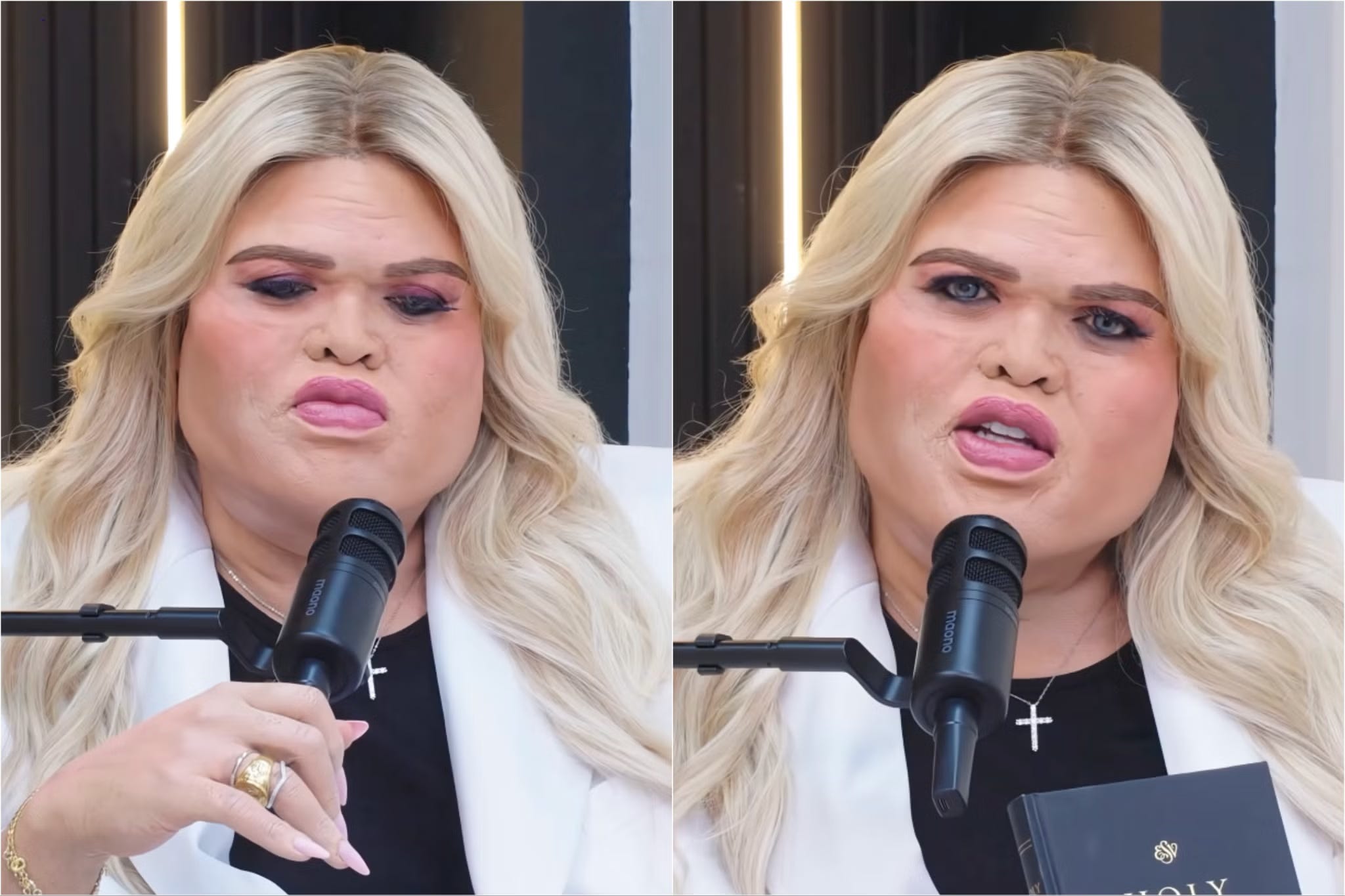
If “Nothing Is Off Limits,” Why Are You Mad at Druski?
Korrine Sky · April 2026 · 7 min read
Druski posted a video of himself playing a conservative white woman ordering an incomprehensibly complicated coffee drink, performing MAGA femininity with surgical precision, and the internet went feral.
Listen to this essay
Narrated version
Druski posted a video of himself playing a conservative white woman ordering an incomprehensibly complicated coffee drink, performing MAGA femininity with surgical precision, and the internet went feral.
Sixty million views in three days. And right behind the views: the outrage.
Not from people who generally dislike racially coded humour. From the exact people who have spent years insisting that comedy should have no limits at all. The sacred-freedom-of-speech crowd. The “learn to take a joke” constituency. People who watched Dave Chappelle mock trans people from a Netflix stage and called it genius. People who watched Ricky Gervais do the same and called it bravery.
Those people looked at Druski doing whiteface and called it racist.
That tells you everything.
Let’s be precise about what Druski actually did, because the outrage depends on the details staying blurry.
Erica Kirk is a character built around a specific kind of performance — the woman who turns her husband’s assassination into a press tour, who takes the podium at mega-church style conferences that cost more than a stadium concert, who has become CEO and media personality while, theoretically, grieving.
The joke isn’t that she’s white. The joke is that nothing, not even a murder, is allowed to interrupt the brand. The grief has a marketing strategy. The tragedy has a merch table.
Druski is mocking a particular strain of soullessness and shallowness — the willingness to monetise anything, the inability to let a single moment of genuine human experience exist outside of a content cycle, the performance of depth by someone who has mistaken an audience for a personality. That is not a joke about an identity. It is a joke about a choice, and the choice keeps making itself.
Now if we compare it to what blackface was actually built to do.
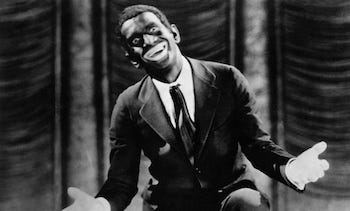
In the 1830s, as the abolitionist movement was gaining momentum, white performers took the stage with burnt cork on their faces and performed Black people as stupid, shiftless, sexually uncontrollable, and subhuman. The dehumanisation wasn’t incidental to the entertainment. It was the entertainment.
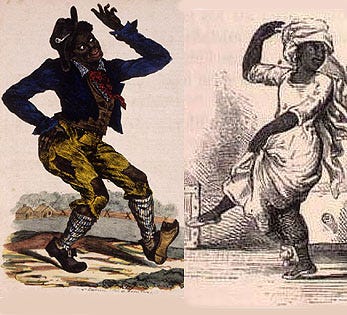
The most famous character was called Jim Crow, a shuffling dim-witted caricature so culturally embedded that when Southern states built their new architecture of racial segregation after Reconstruction, they reached for that name. Jim Crow laws governed where Black people could sit, eat, travel, work, testify, and vote. A minstrel character became a legal system. Comedy became a cage.
When someone asks but what if a white person did blackface, they are asking you to treat the only relevant variable as the face paint, and not the century of organised dehumanisation the face paint was built to justify.
There is no equivalent system in which mockery of white people produced law. No legislation takes its name from a caricature. The mechanism ran in one direction because it was designed to.
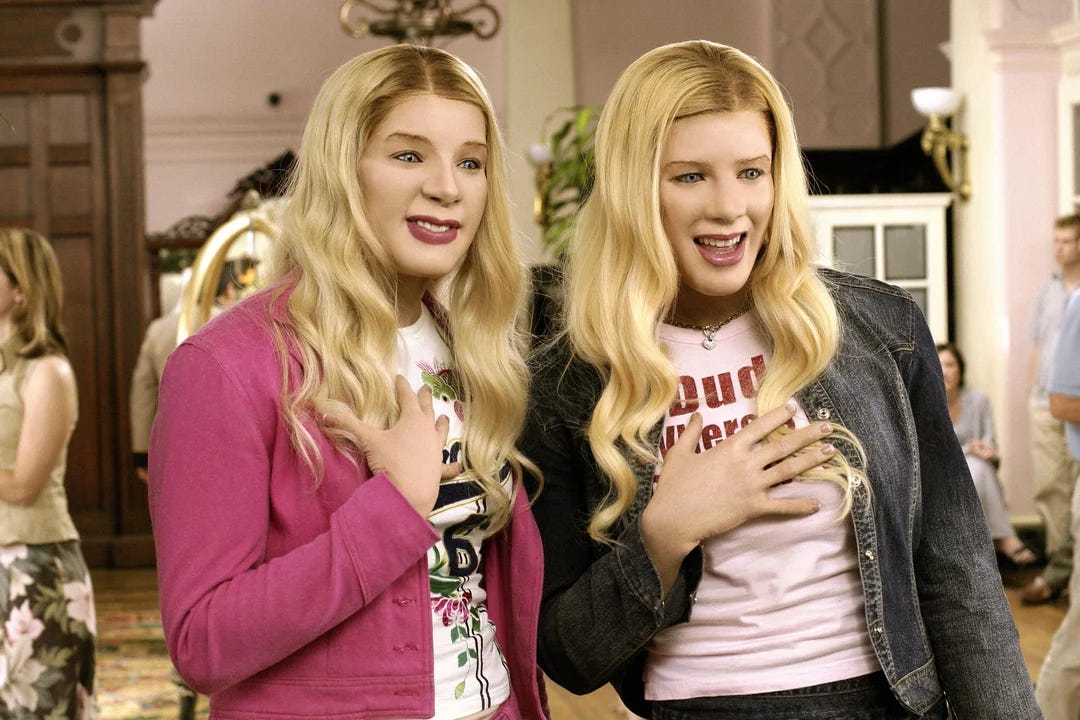
Druski’s sketch carries none of that weight. Not because we’ve transcended race, but because whiteface was never deployed to build a cage. If you need evidence of that, White Chicks made $70 million in 2004 and the Wayans brothers didn’t bring down Western civilisation. Druski posted a 90-second video and people are writing op-eds.
Here is how the permission structure actually operates.
A transphobic person watches a Chappelle special. The joke confirms exactly what they already believe. They feel seen and go home a little more comfortable with how they already were. Across town, a liberal watches the same special. They consider themselves too sophisticated for simple bigotry, so they laugh because they believe they’re watching satire — a brave comedian holding a mirror to the culture war.
Chappelle collects from both audiences while the trans community absorbs the damage from both transactions. Nobody involved in the first two transactions has any incentive to examine the cost of the third.
If the satire were landing as satire, the transphobe wouldn’t be laughing. The fact that the joke works equally well as bigotry and as commentary tells you exactly what it’s doing — both audiences are paying a toll without noticing where the money goes.
This is what the social commentary defence actually protects: not artistic integrity, but the ability to profit from audiences laughing for opposite reasons while the target splits the bill alone. A comedian can be technically brilliant and still function as a delivery mechanism for harm. The industry needs those two things to be mutually exclusive. They have never been.
The genius label is part of the architecture.
Call someone a genius often enough and criticism starts to look like ignorance. The label functions as protective armour, and it’s worth asking who benefits from it staying on.
Watch a video celebrating Ricky Gervais as a prophetic truth-teller — working-class outsider, ahead of his time, brave enough to say what others won’t — and you’re watching the mechanism in real time. The celebration isn’t entirely wrong. His Golden Globes evisceration of Hollywood’s self-congratulation was legitimate punching up. Calling out Weinstein in a room full of people who knew and said nothing took genuine nerve.
But that legacy gets bundled with his trans material and presented as the same instinct. The working-class hero targeting actual predators is wrapped around the comedian targeting a marginalised group, and the wrapper lends credit to everything inside it. You build enough legitimate credibility on one side of the ledger and it quietly covers your withdrawals on the other.
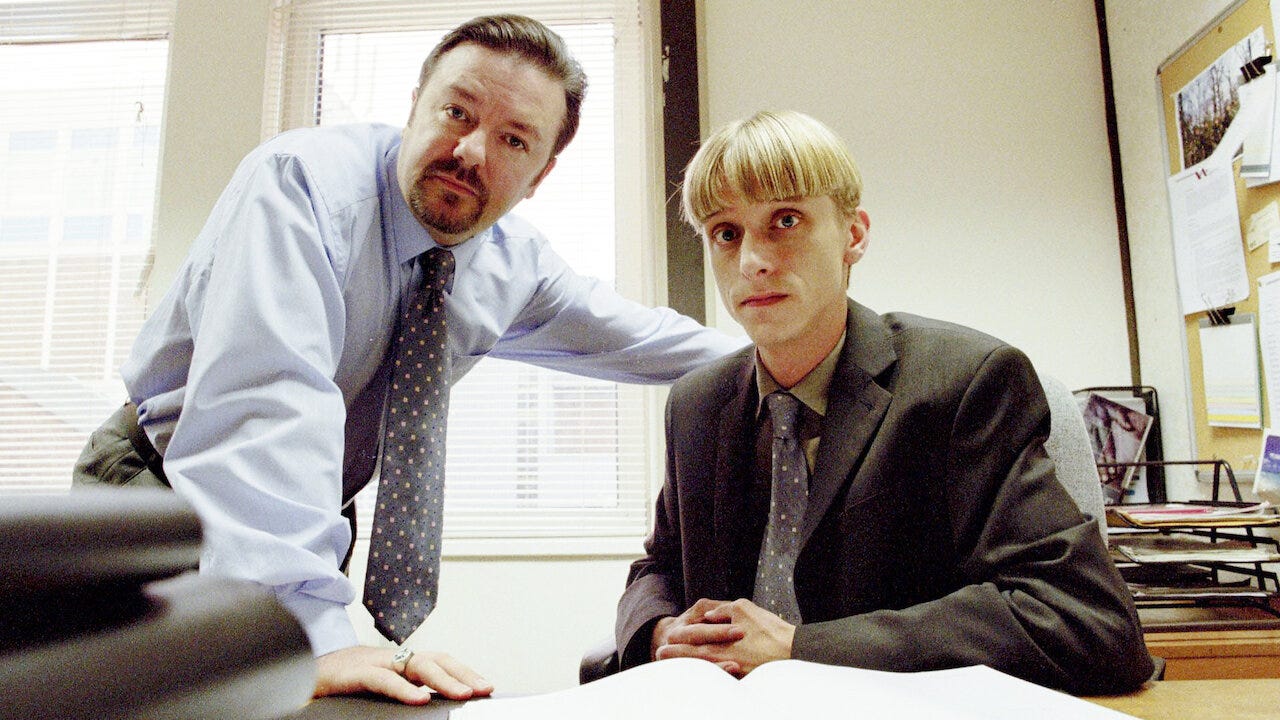
The Office was a masterclass in irony, laughing at the oblivious bigot rather than with him. That distinction is load-bearing. When it disappeared from Gervais’s later work, the genius consensus stayed anyway. The armour held even when the sword changed direction.
Consider the institutions themselves.
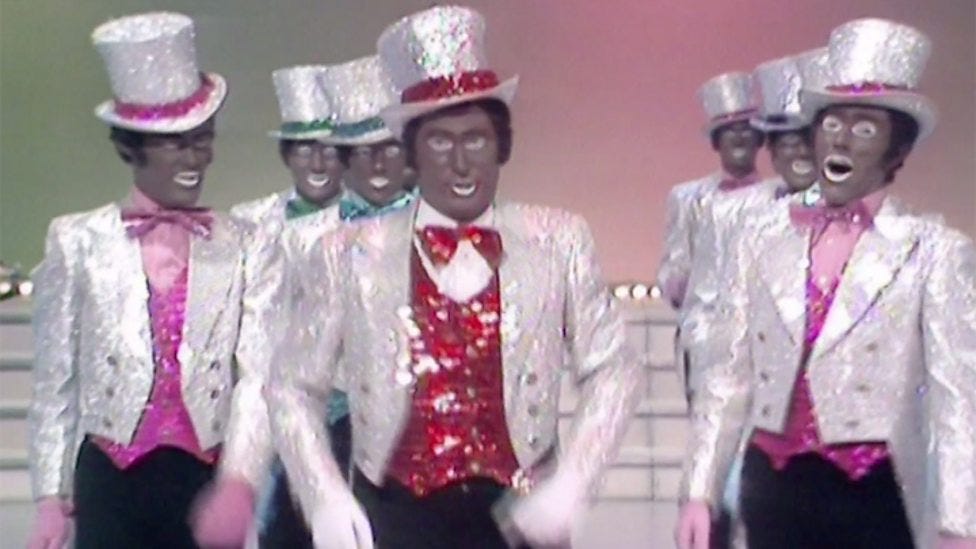
The Black and White Minstrel Show ran on BBC primetime from 1958 to 1978. Twenty years. Formal complaints were raised in the 1960s. The harm was not unknown. It was simply not expensive enough for anyone with the power to stop it.
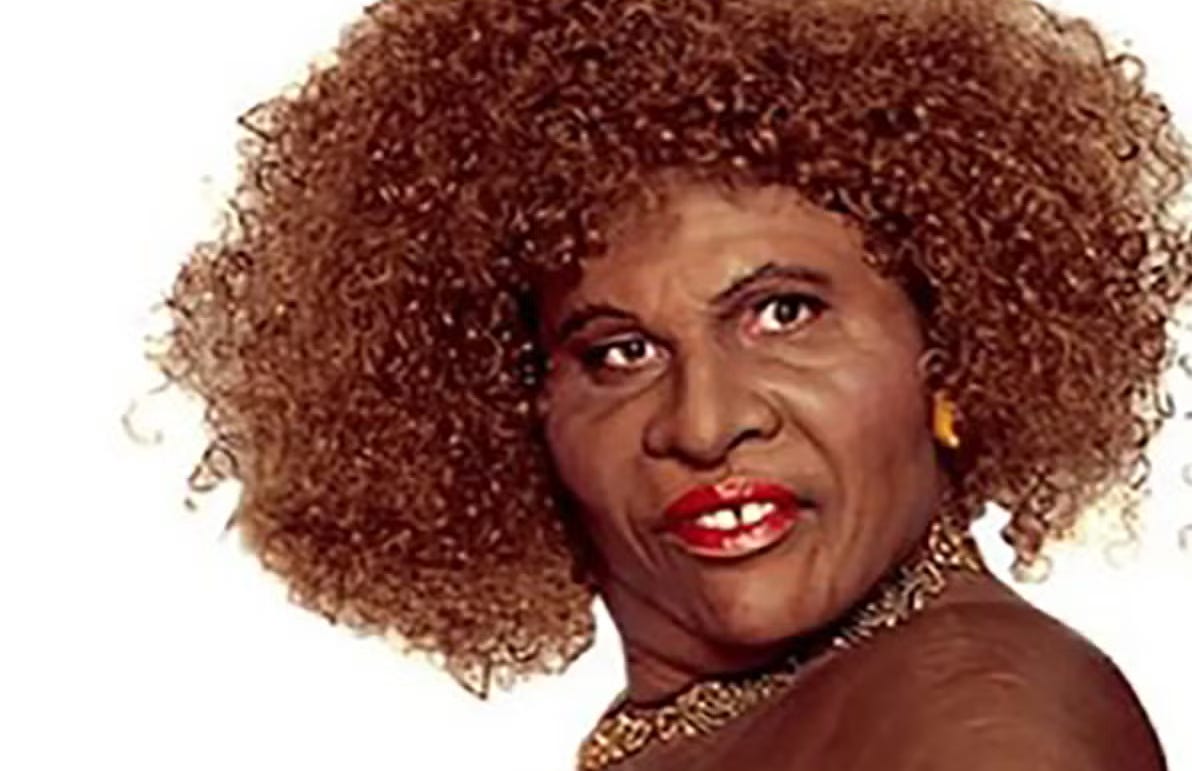
Little Britain, Bo’ Selecta, Come Fly With Me — not underground provocations but mainstream, award-winning, beloved British entertainment. None of it disappeared because someone had a principled awakening. It disappeared in 2020 when the organised, economically legible pressure of the Black Lives Matter movement made continuing to platform it reputationally costly for the BBC and Netflix. What changed wasn’t the ethics. It was the price.
This is the only mechanism that has ever determined consequences in comedy. Kevin Hart lost the Oscars hosting gig because the Hollywood executive class has significant LGBTQ+ representation. Jerry Sadowitz was cancelled mid-Edinburgh run over antisemitic content because Jewish representation inside arts institutions is substantial. When those communities are targeted, the people with the power to act are personally proximate to the harm.
When trans people are targeted, or when Black British audiences spent decades watching themselves caricatured in primetime, the decision-makers could observe the damage from a comfortable distance and conclude it wasn’t their problem.
The line between what gets punished and what gets celebrated has never tracked moral principle. It tracks institutional proximity, and the system produces exactly the outcomes it was designed to produce.
Final Thoughts
The whataboutism around Druski presents itself as a fairness argument — same action, same logic, equal standards. What it actually requires is that you agree to treat race as a neutral, interchangeable variable, weightless and historyless, divorced from the structures it was used to build and maintain. It asks you to look at a sketch about how entitlement disguises itself as victimhood and see only: Black man wore light makeup.
But by every standard that defenders of offensive comedy claim to hold — target power not vulnerability, expose mechanisms not identities, punch up not down — Druski did it correctly. He followed all the rules. And the people who most loudly insist those rules are sacred are the ones calling him racist.
Which means the rules were never really about comedy.
Paul Mooney, Richard Pryor’s longtime collaborator, once said his job was to make white people mad, that they had to learn to laugh at themselves. Whatever you think of that approach, it had one quality the current debate almost entirely lacks: honesty about what it was doing and why. The comedians and institutions hiding behind the social commentary defence are not being honest about intent. They are producing harm, collecting revenue from it, and calling everyone who notices humourless.
Comedy is not a mirror. A mirror is passive. A comedian with 50 million Netflix viewers and every industry award available is a cultural force actively constructing something. The question worth asking is not whether the joke is funny. It’s what the joke is building, and who has to live inside what it constructs.
Druski followed the rules. The rules punished him anyway.
The punchline was never the joke. It was always the architecture around who gets to tell it, who gets to laugh, and who is expected to absorb what the laughter costs.
If your first instinct after reading this was to reach for the exception that disproves everything — sit with that instinct for a moment before you use it.
Subscribe now
Share
Culture & Commerce
Get the next essay first.
Culture, brand power and influence, read straight from my desk. No spam, unsubscribe anytime.
Prefer Substack? Follow Culture & Commerce there.
Originally published in Culture & Commerce. Read the original post.